




A beloved brand, a bold AI bet, and zero room for off-brand output.
Tito's saw what most brands are still only talking about: generative AI could give every rep a personal mixologist. Their sales team pitches wildly different accounts — dive bars, hotel chains, festivals — and every one wants cocktail ideas that feel local, seasonal, and fresh. Building those by hand doesn't scale.
But an AI tool for a beloved brand comes with real stakes. Outputs had to stay Tito's-centric, follow their mixology standards, and be practical enough for a real bartender to execute. The interface had to feel effortless for people who'd never written a prompt in their lives. And the first working version needed to wow a company-wide audience on a hard deadline. This wasn't a chatbot experiment — it was designing trust between a sales team and a machine.
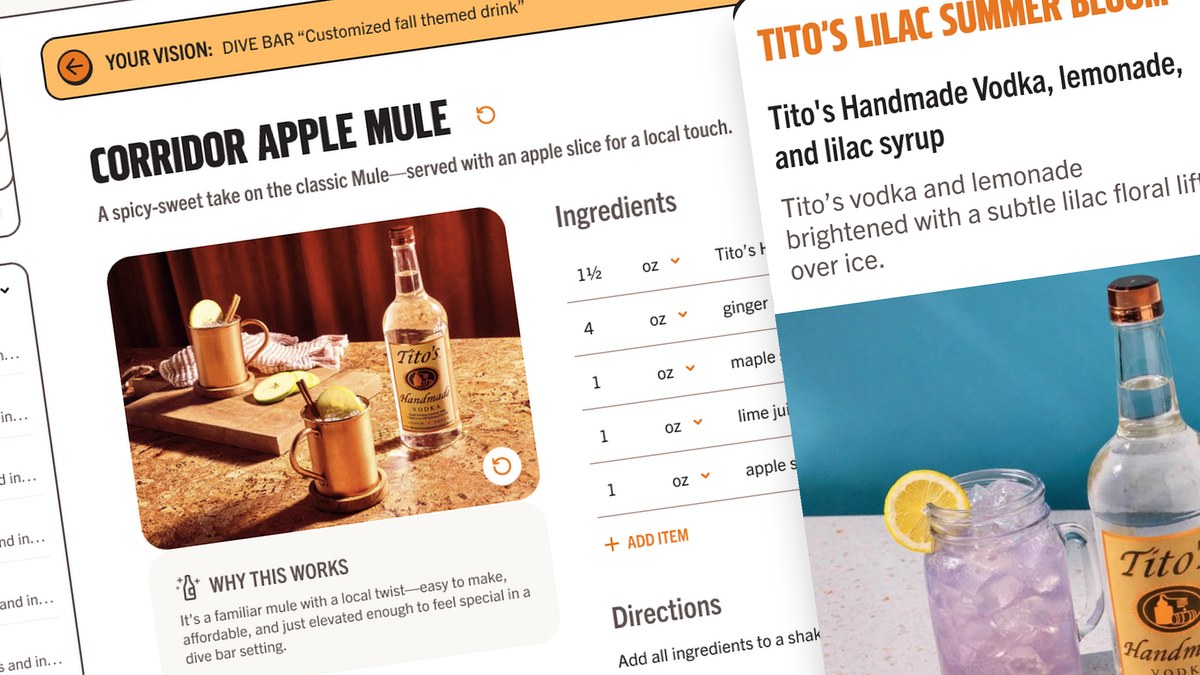
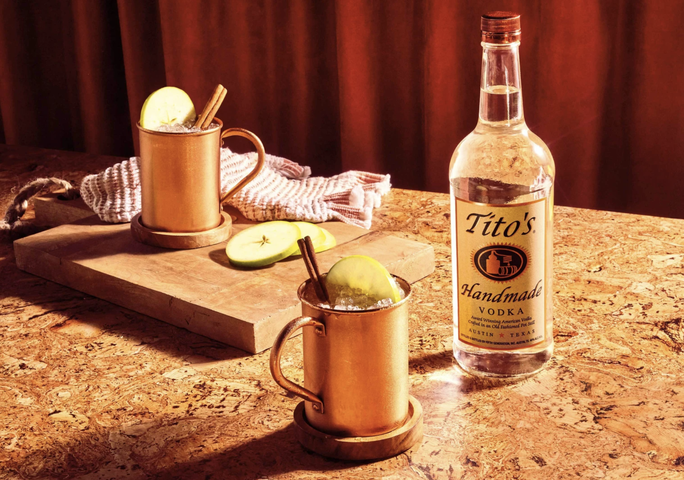
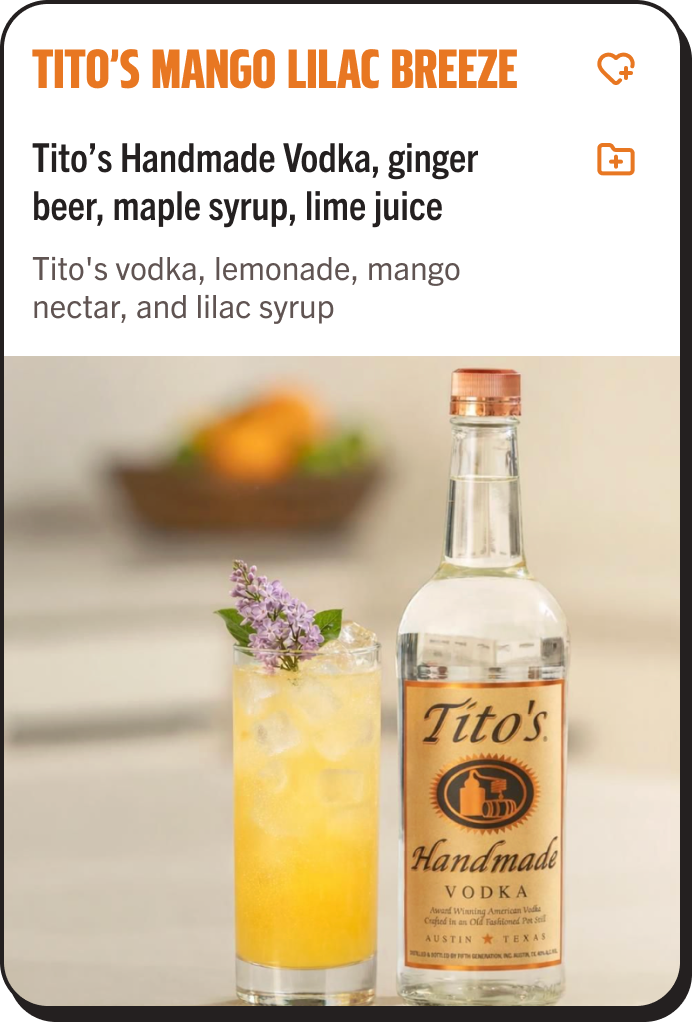
One prompt later — recipe, imagery, ingredients, directions, and a "why this works" note, every element regenerable or hand-editable.
Design the AI around the people using it — not the other way around.
We started where we always start: with the people using the product. Most reps had never written a prompt in their lives, and none of them needed to. Four moves shaped the work:
-
Prompt-First UX
An input flow that meets reps halfway — structured context like venue type and occasion does the heavy lifting, while an open "vision" field lets them describe what they need in plain language. One detail gets a starting point; three details gets a recipe you'd actually pitch.
-
Brand Guardrails for Generative Output
Every recipe and image is generated from scratch, constrained by Tito's mixology parameters and visual templates. When the AI swings too far, reps can regenerate any element, spot-edit ingredients and directions, or flag feedback that improves the system. Human taste stays in the loop by design.
-
From Generation to Pitch
AI output is only useful if it travels. Favorites and Collections let reps organize recipes around real accounts, while PDF exports and live shareable links get ideas in front of bar owners minutes after generation — no login required.
-
Designing for Adoption, Not Just Launch
We validated the experience through user testing across four sales personas, then built a 6-month engagement strategy — training, weekly touchpoints, manager enablement, and interview rounds that feed a living product backlog. The goal: make "I should try BERT" a reflex before every account visit.
The output had to travel further than a screen. Every recipe BERT generates can leave the app as a polished PDF or a live shareable link — imagery, ingredients, directions, and a "why this works" note included — so a rep can text a bar owner three tailored concepts before they've left the parking lot.
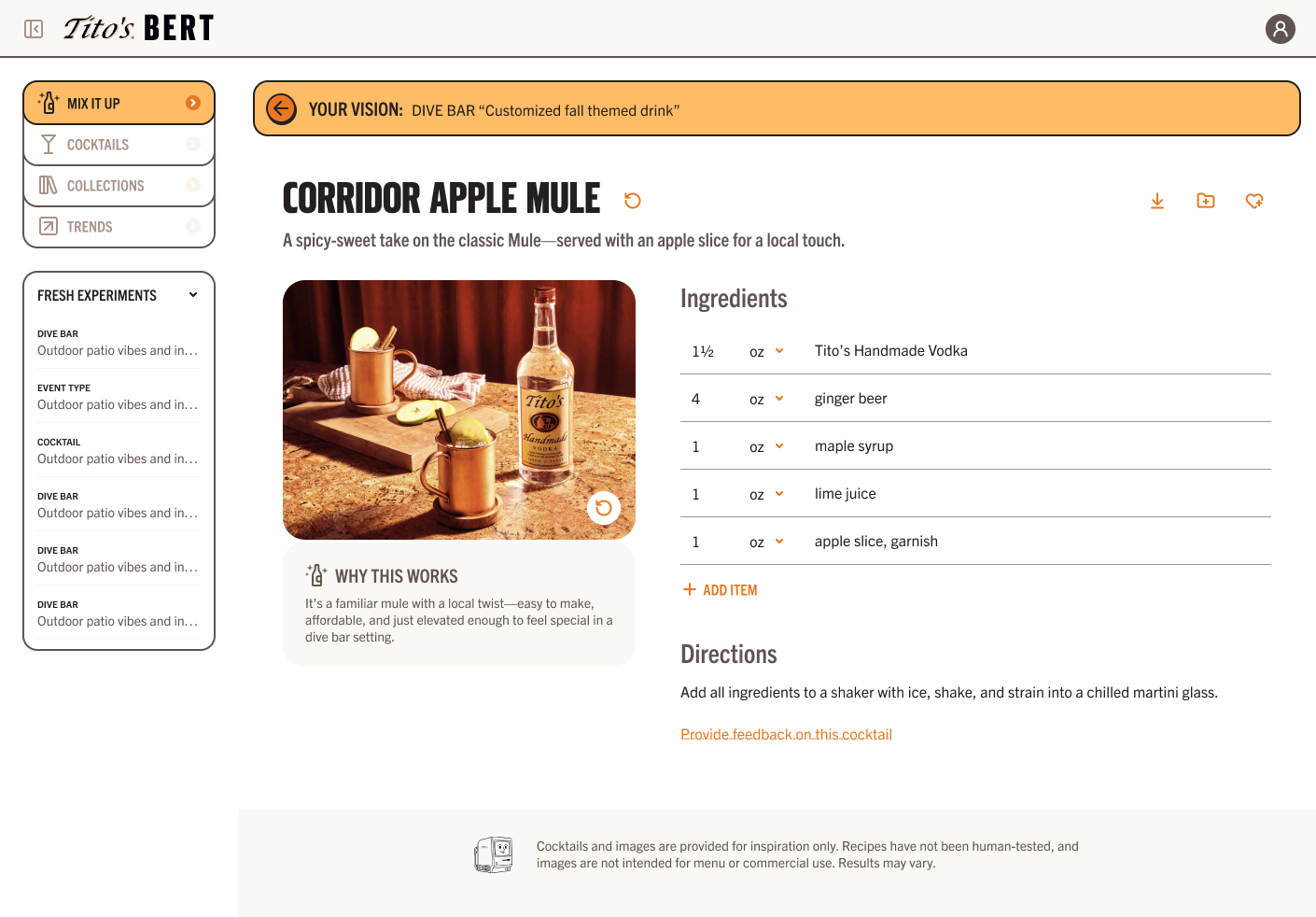
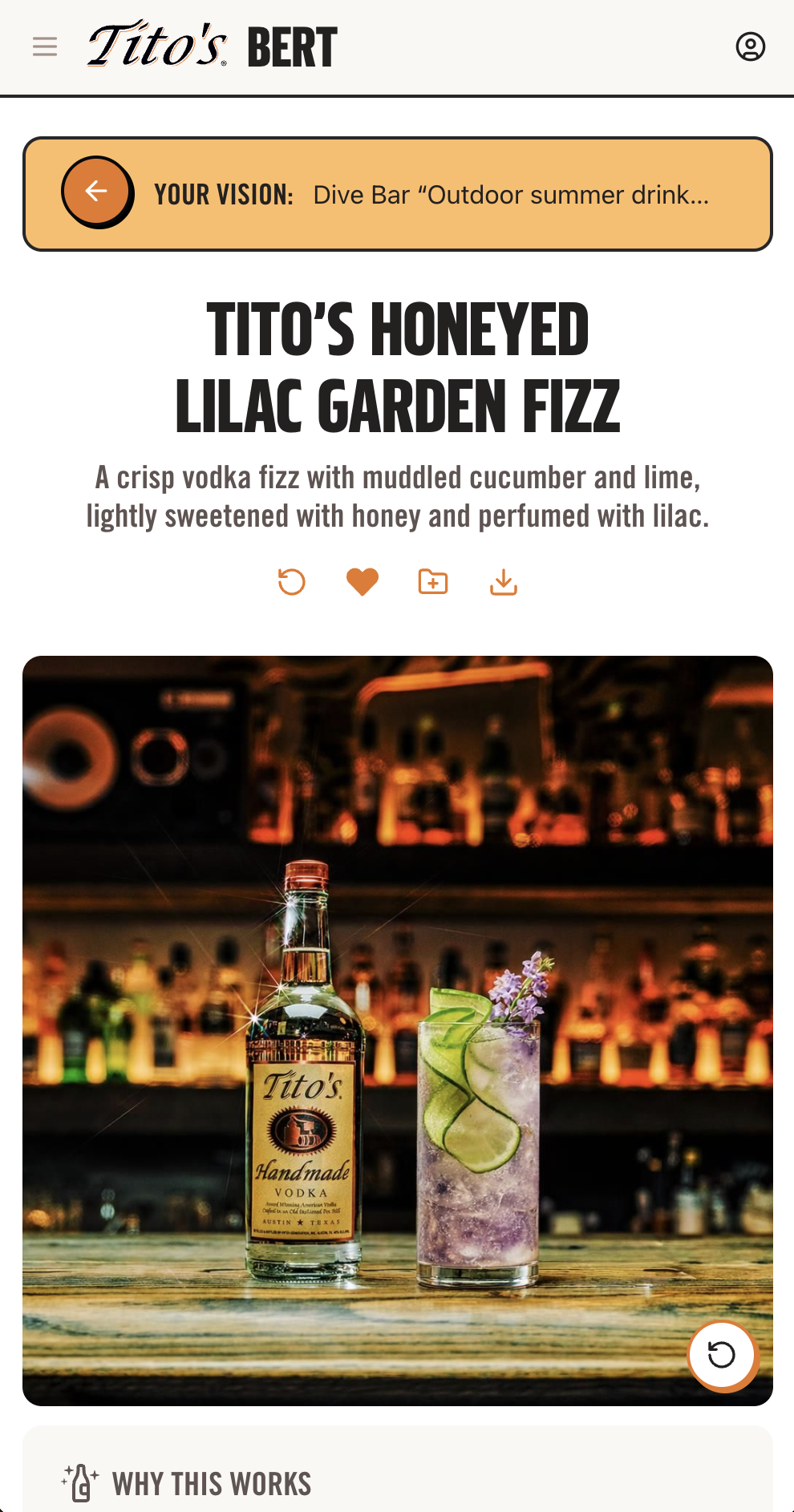
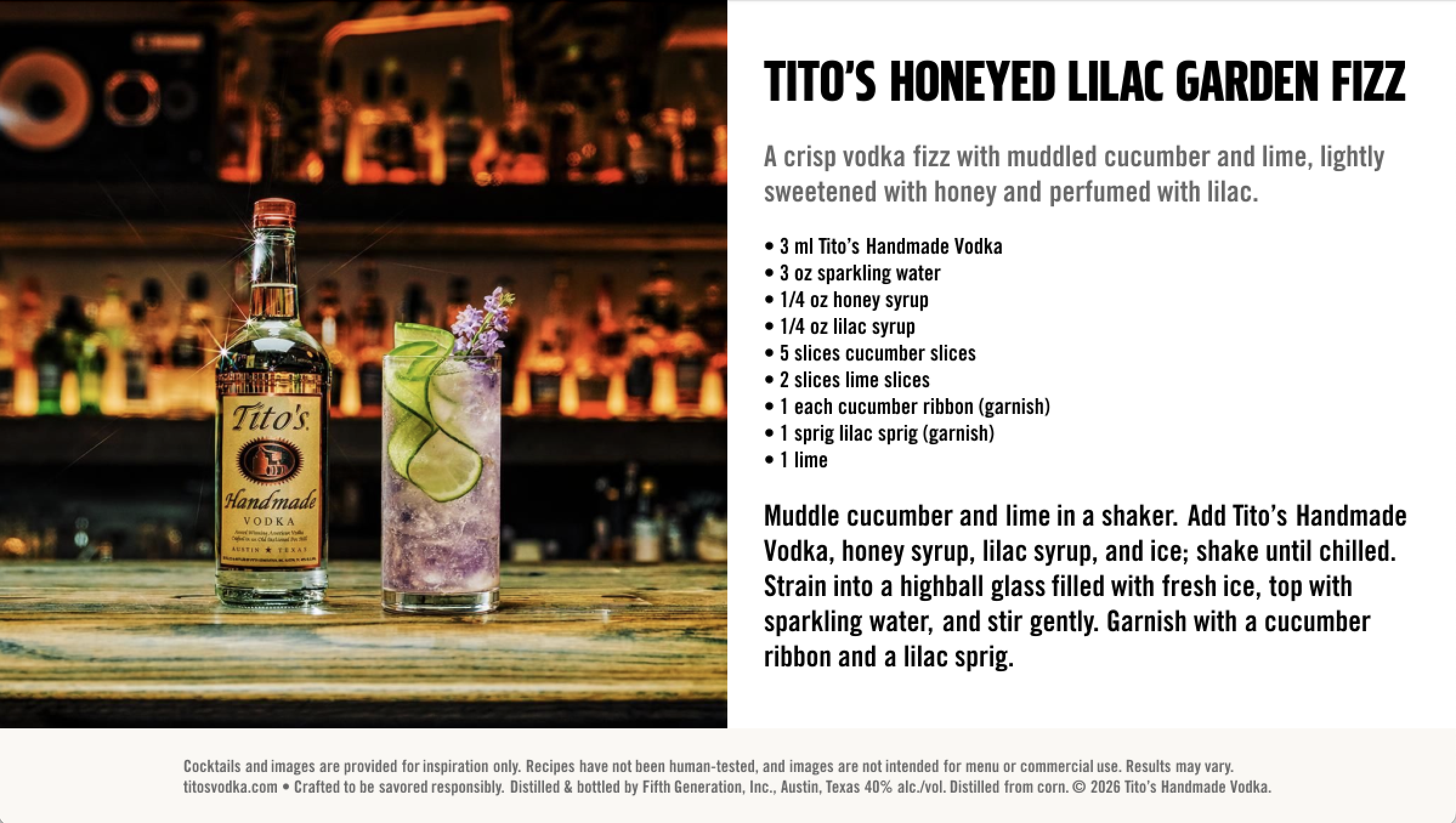
The same recipe, everywhere it needs to go — in-app on desktop and mobile, and as a shareable card a rep can leave behind after a pitch.
Generative AI, turned from a headline into a field tool.
Reps can now walk out of an account visit, generate three tailored cocktail concepts from the car, and text them to the bar owner before close of business — every one aligned to Tito's brand and mixology standards.
The engagement spanned UX research, product strategy, UI design, design QA through implementation, user testing across four sales personas, live training for ~250 users, and a 6-month adoption strategy — taking BERT from clickable prototype to a launched product at mixitwithbert.com in under a year, in partnership with Supergood on engineering and AI.
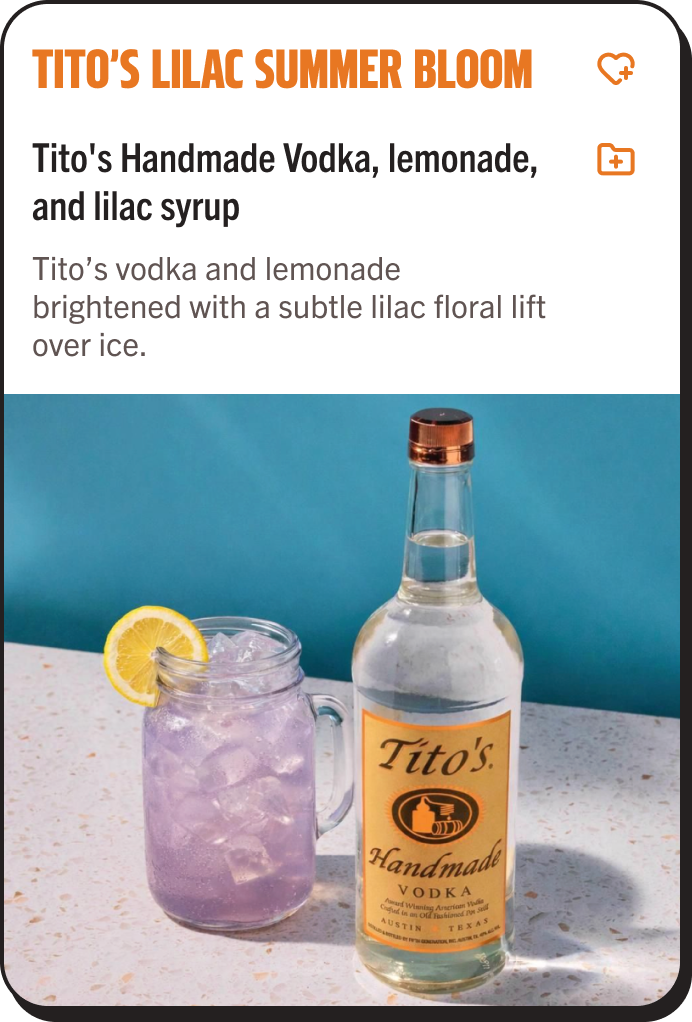
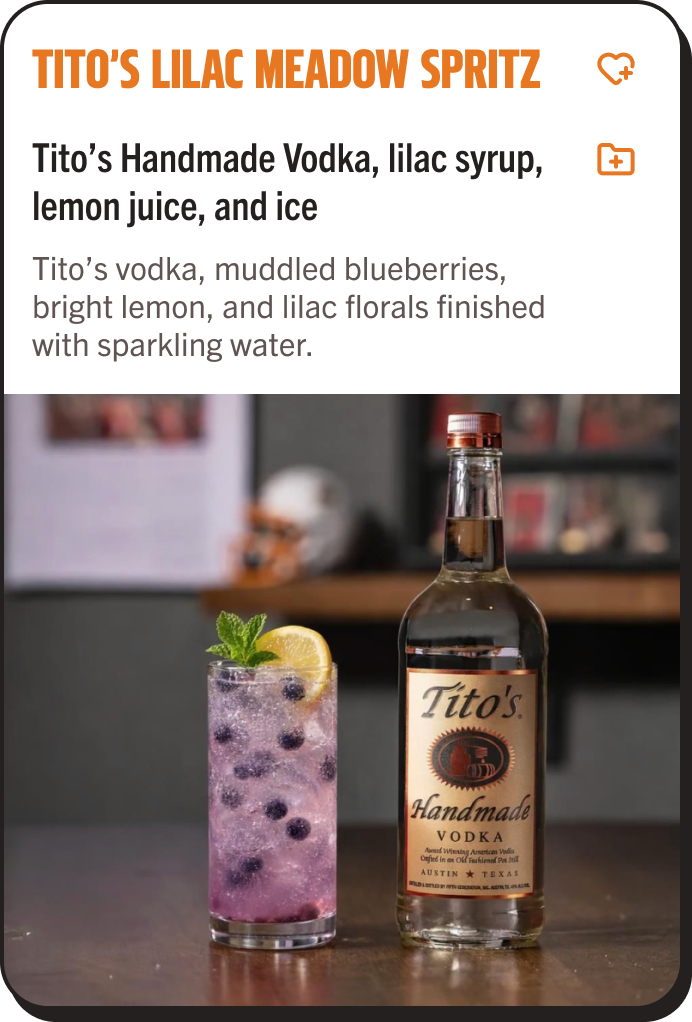
Even the wait has a voice — BERT shimmers through its favorite line while three tailored concepts pour in.
Can I pour you a drink? Figuratively speaking.BERT, Tito's resident AI mixologist
Questions we get about BERT.
What did Snacks design for Tito's Handmade Vodka?
Snacks designed BERT, a generative AI platform that creates custom cocktail recipes and imagery for Tito's sales team. The engagement covered UX research, product strategy, UI design, user testing, design QA, and a post-launch adoption strategy, in partnership with Supergood on engineering and AI.
How is designing an AI product different from a traditional app?
The output is different every time, so the design has to build trust: setting expectations around generation time, giving users control through regeneration and manual edits, and constraining the AI with brand guardrails so creativity never goes off-brand. We designed for the model's behavior, not just the screens.
How did Snacks make AI approachable for non-technical users?
By splitting the work between structure and freedom: guided inputs like venue type and occasion carry the context, while an open text field lets reps describe their vision naturally. No prompt engineering required — the interface teaches better prompting through use.
How did Snacks drive adoption of the AI tool?
Adoption was designed like a product feature. We ran user testing across every sales persona, supported live training for ~250 users, and built a 6-month engagement strategy with weekly touchpoints, manager enablement, and feedback loops feeding the roadmap.
Can Snacks design AI-powered products for other brands?
Yes. BERT shows the full arc: identifying where generative AI creates real leverage, designing an experience non-technical teams trust, and building the adoption engine that turns a launch into a habit. That playbook translates to any brand putting AI in the hands of its people.